Where your brand shows up, and what to build next.
A presence map is a read of what AI engines say about your brand when buyers ask: AI Overviews, AI Mode, ChatGPT, Gemini, Copilot, or whichever engines your market uses. Hundreds of questions, asked the way buyers ask them. It feeds the Presence Index, our own score, and comes back with the moves that lift it fastest.
Two editions- Free first read. I map your brand before we meet and bring it to the call: 30 questions, one read.
- Monthly client edition. From 120 to 300-plus questions per language, re-read each month with the moves to build next.
A real presence map, names masked.
A foreign outdoor brand selling in Japan, read across 1,195 AI answers to 315 questions buyers ask in Japanese, in October 2026. What the answers say about it, where they skip it, and the moves we would build. The brand and its rivals are masked; every figure is as measured.
An example, not a client case: a read of public AI answers about a brand we have not worked with.
- Brand
- Foreign outdoor brand, selling in Japan
- Questions
- 315, in Japanese
- AI answers
- 1,195
- Engines
- AI Overviews, AI Mode, ChatGPT, Gemini
- Read
- October 2026
- Names
- Brand and rivals masked
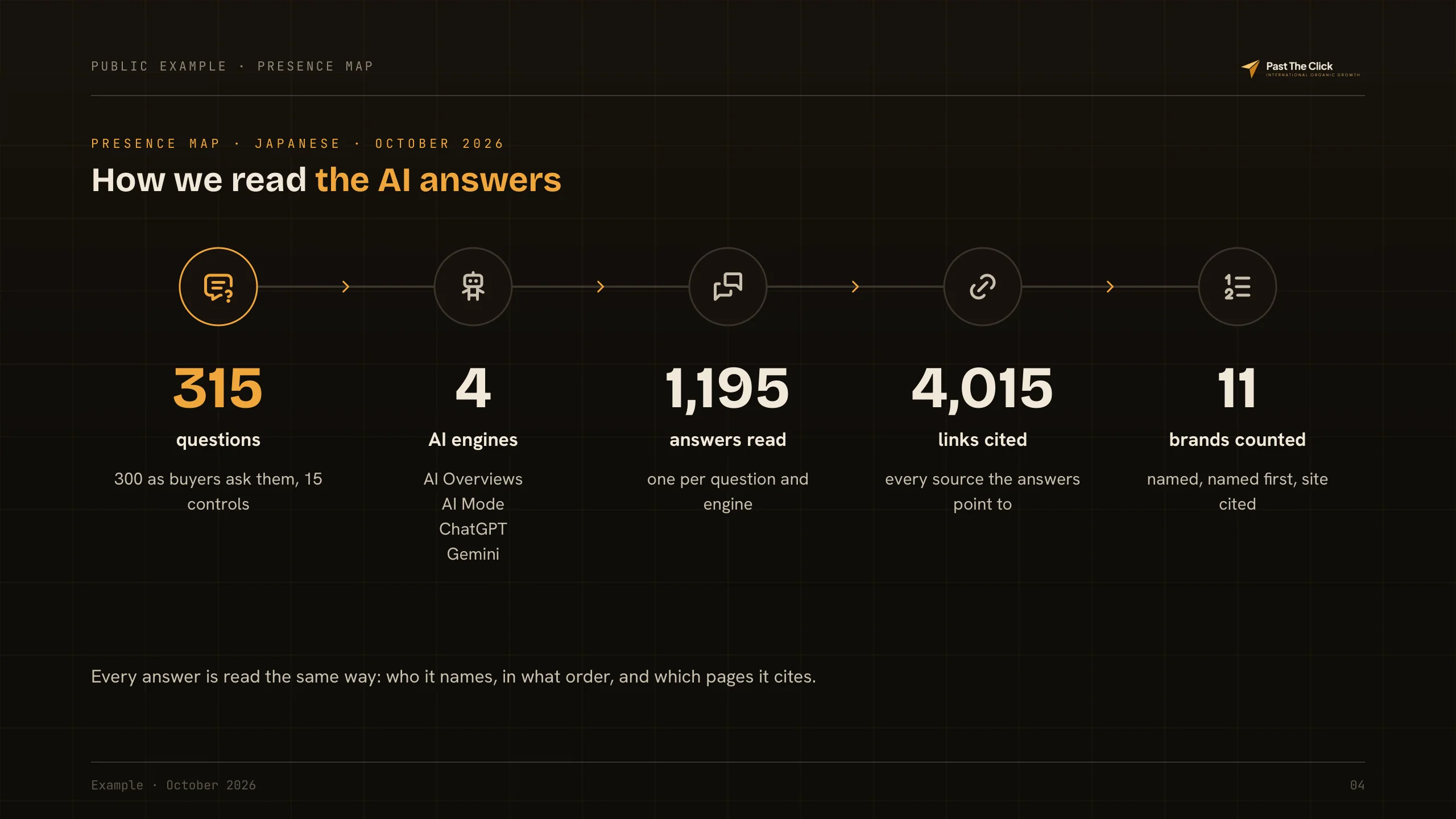
Three hundred questions, four engines, one read.
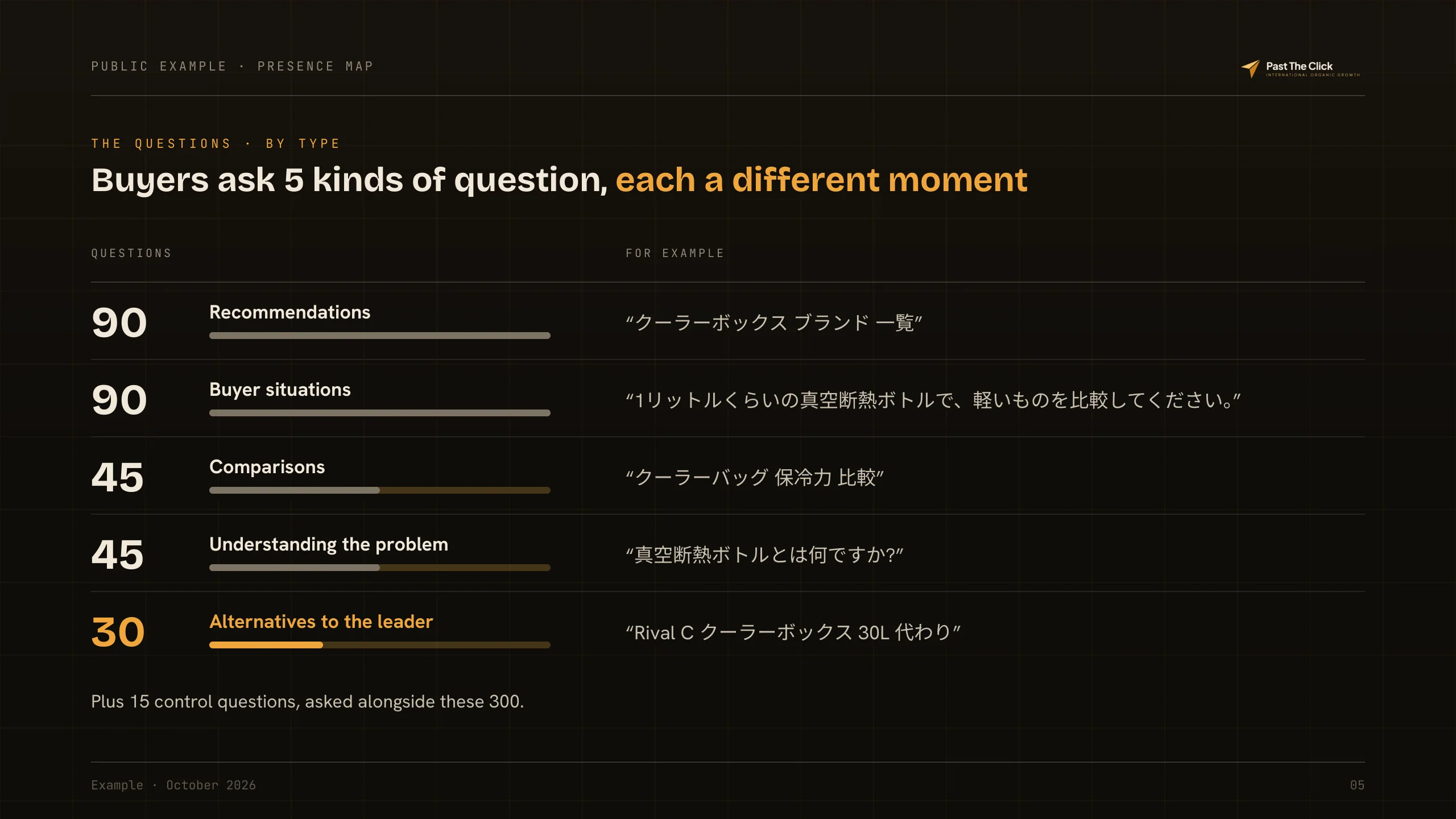
We wrote 300 questions the way buyers in Japan ask them, in five kinds: recommendations, buyer situations, comparisons, understanding the problem, and alternatives to the leader, plus 15 control questions. Each one went to AI Overviews, AI Mode, ChatGPT and Gemini: 1,195 answers, 4,015 links cited.
Every answer is read the same way: who it names, in what order, and which pages it cites. The engines and the number of questions are set per client; this read used four engines.
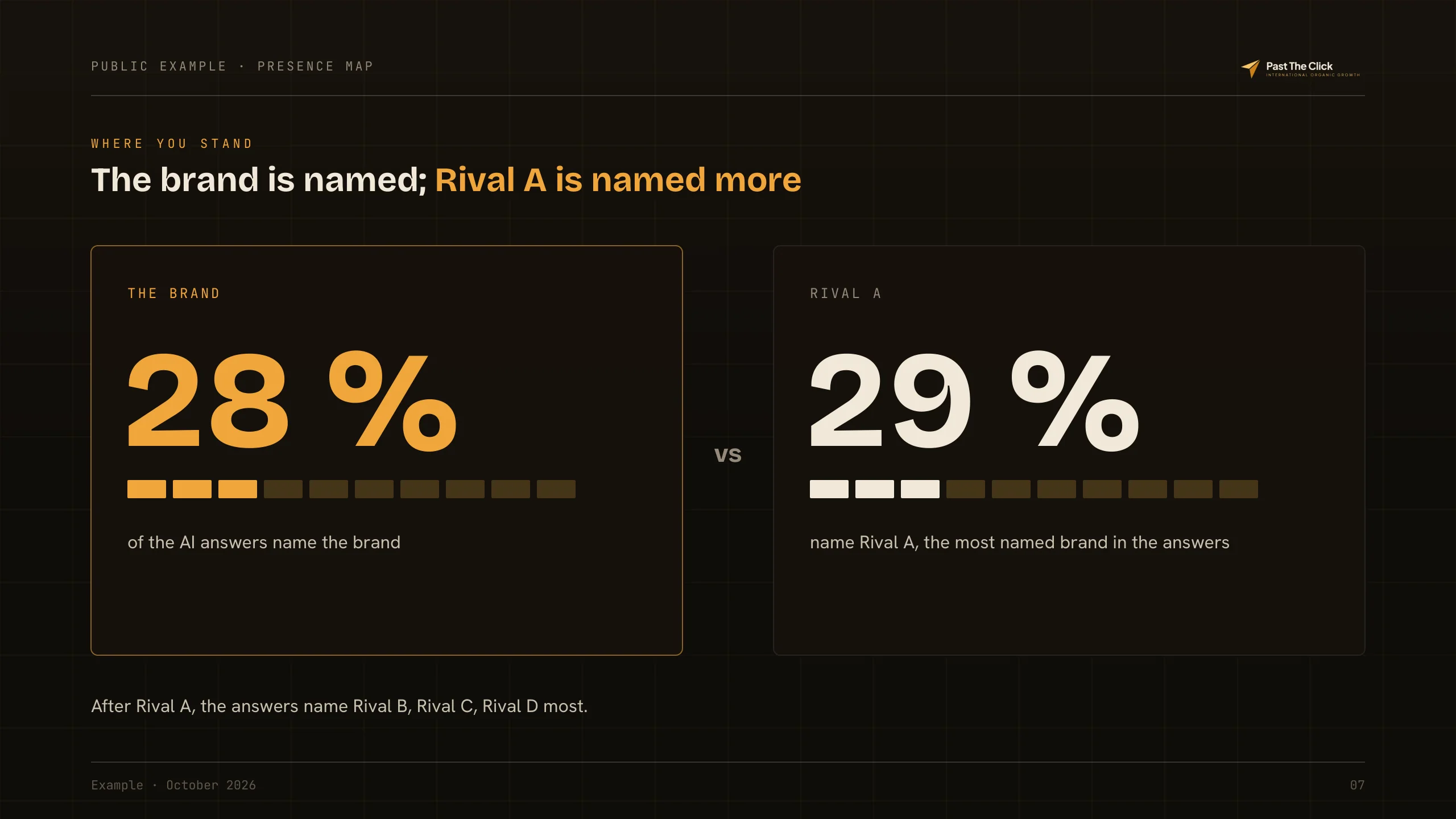
Named in 28 % of the answers. The leader, in 29 %.
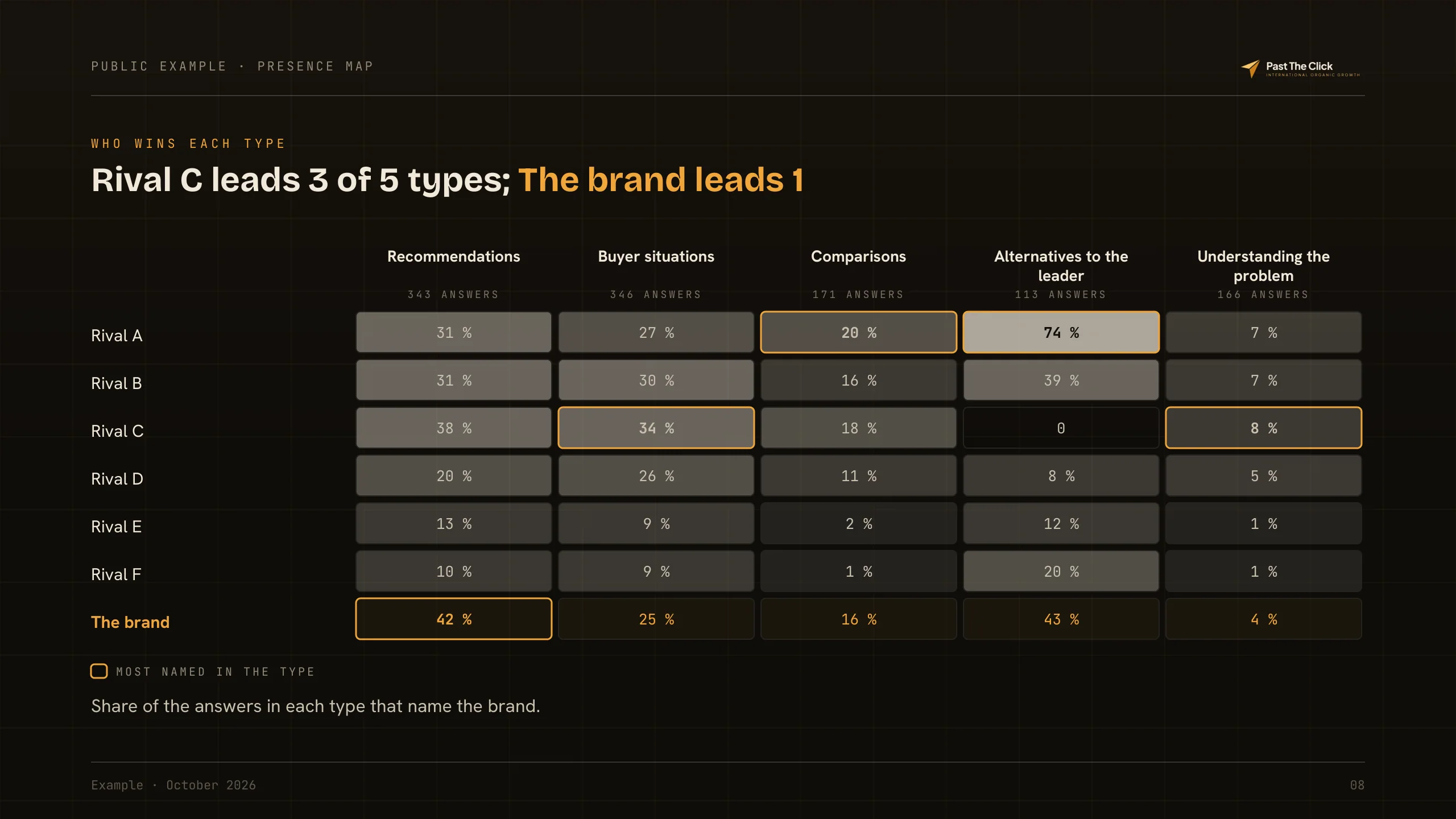
Close to the top: the brand is named in 334 of 1,195 answers, the most named rival in 346. By kind of question it splits: one rival leads three of the five kinds, the brand leads one. On Gemini the brand is the most named brand.
The answers cast it as the premium hard cooler others are measured against, and price is the caveat they attach: 150 of the 334 answers that name it call it expensive. Two AI Overviews answers get its construction wrong.
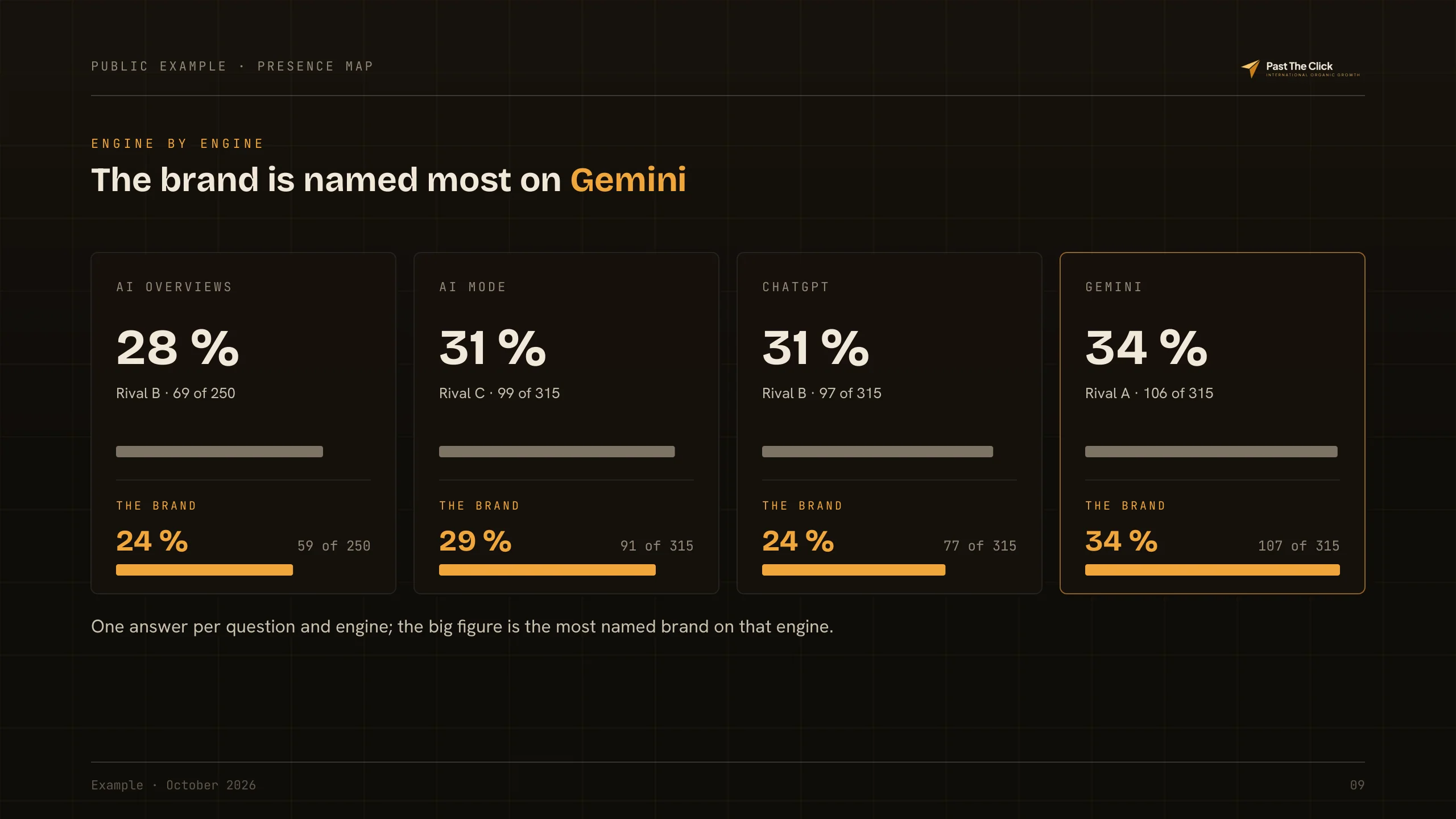
Compared on figures the brand never gives.
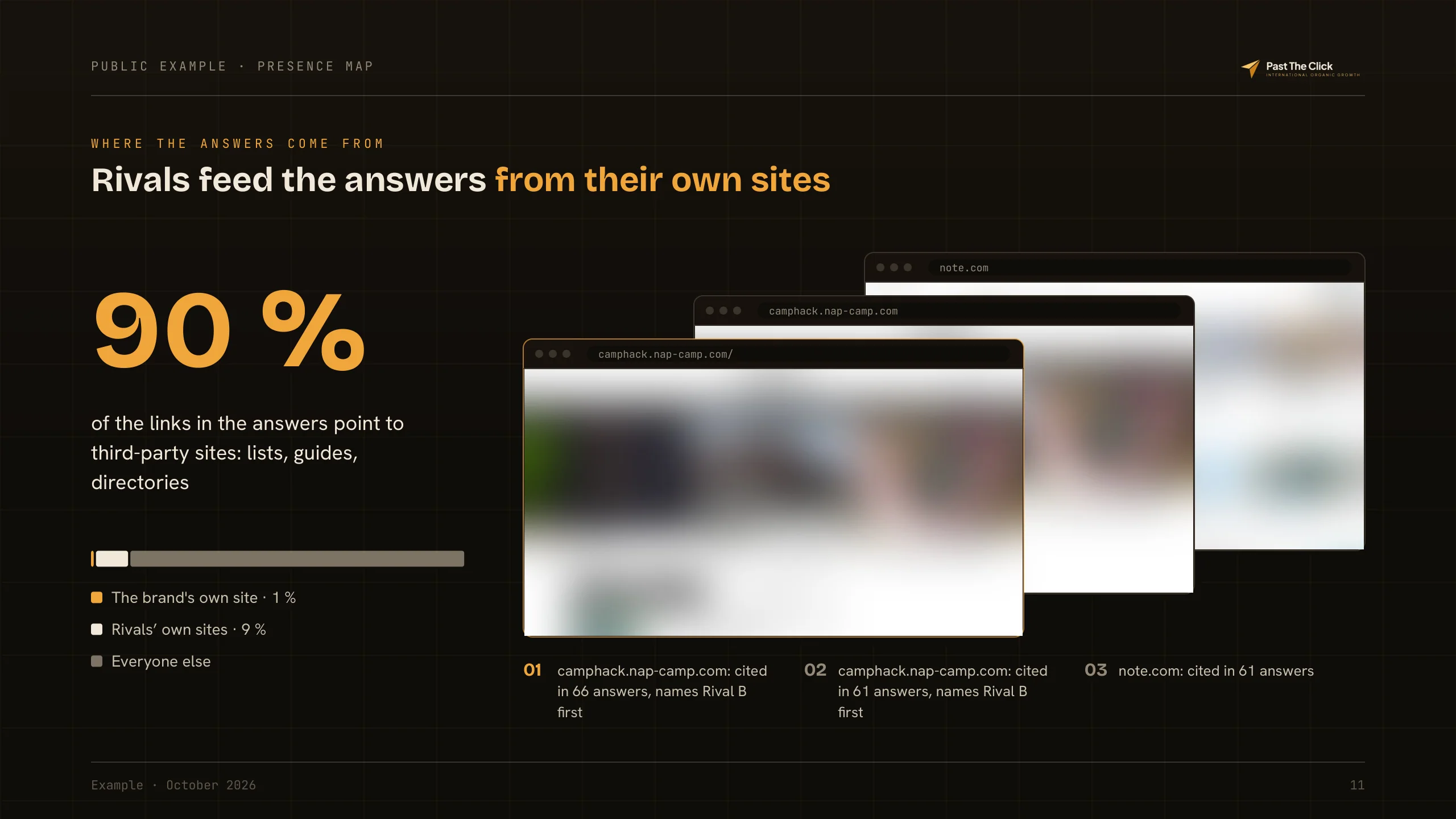
Nine in ten links in the answers point to third-party sites: lists, guides, directories. The brand’s own site is 1 % of them, its rivals’ sites 9 %.
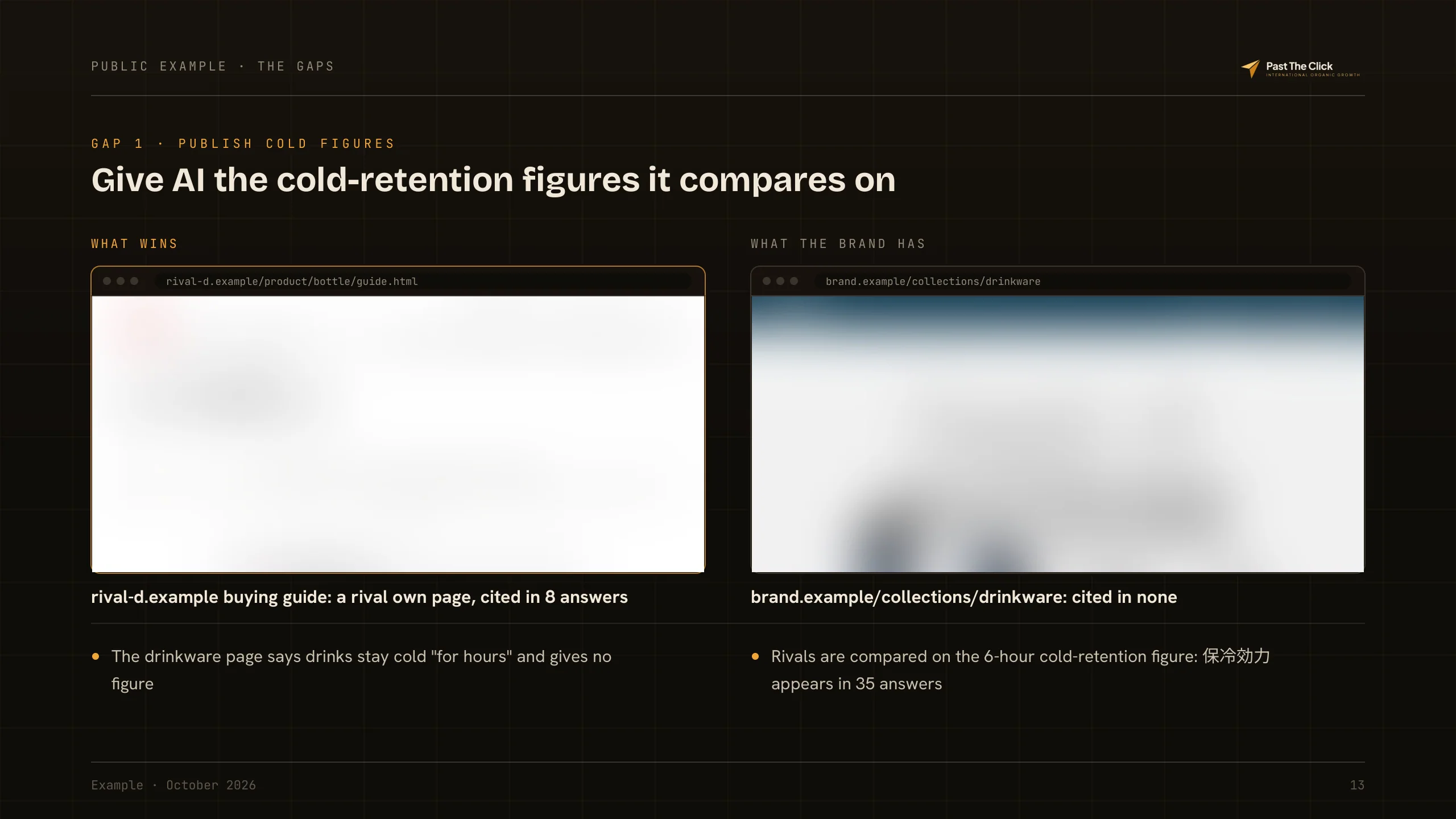
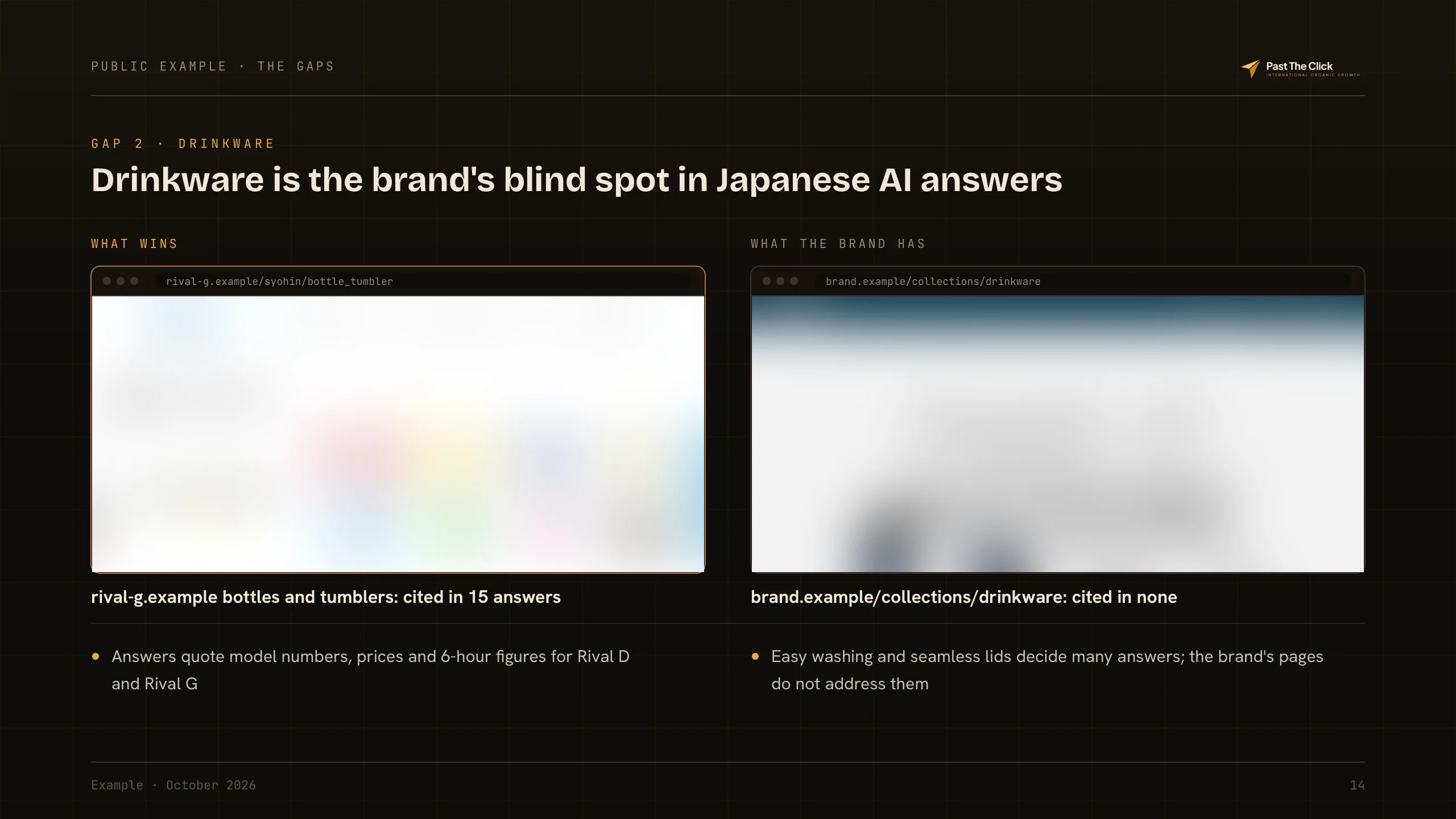
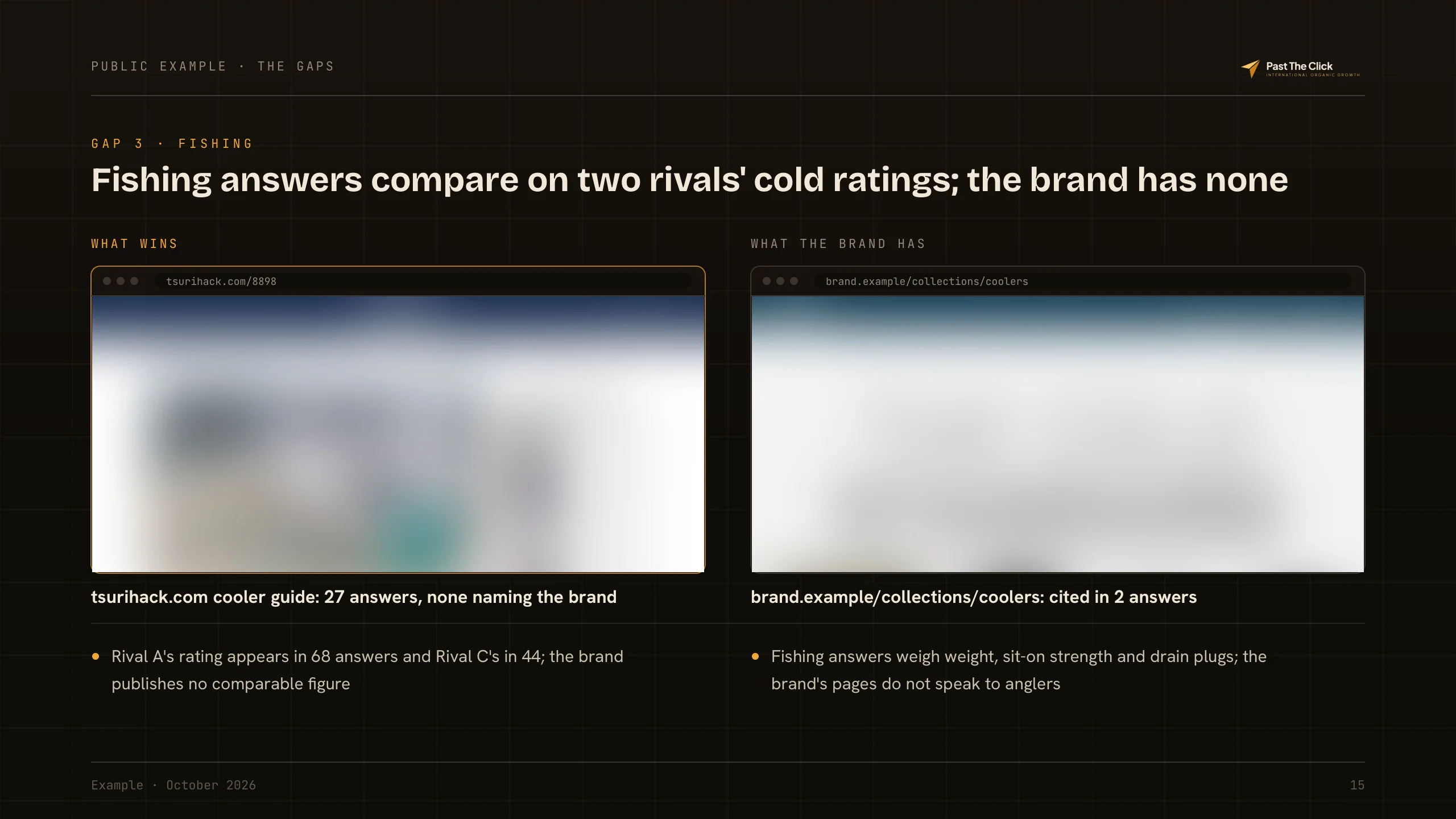
Three gaps come out of it. Buyers compare on a six-hour cold-retention figure the brand’s pages never give; drinkware answers quote rivals’ model numbers, prices and figures; fishing answers compare on two rivals’ cold ratings, and the brand has none.
One move in full, two on contract.
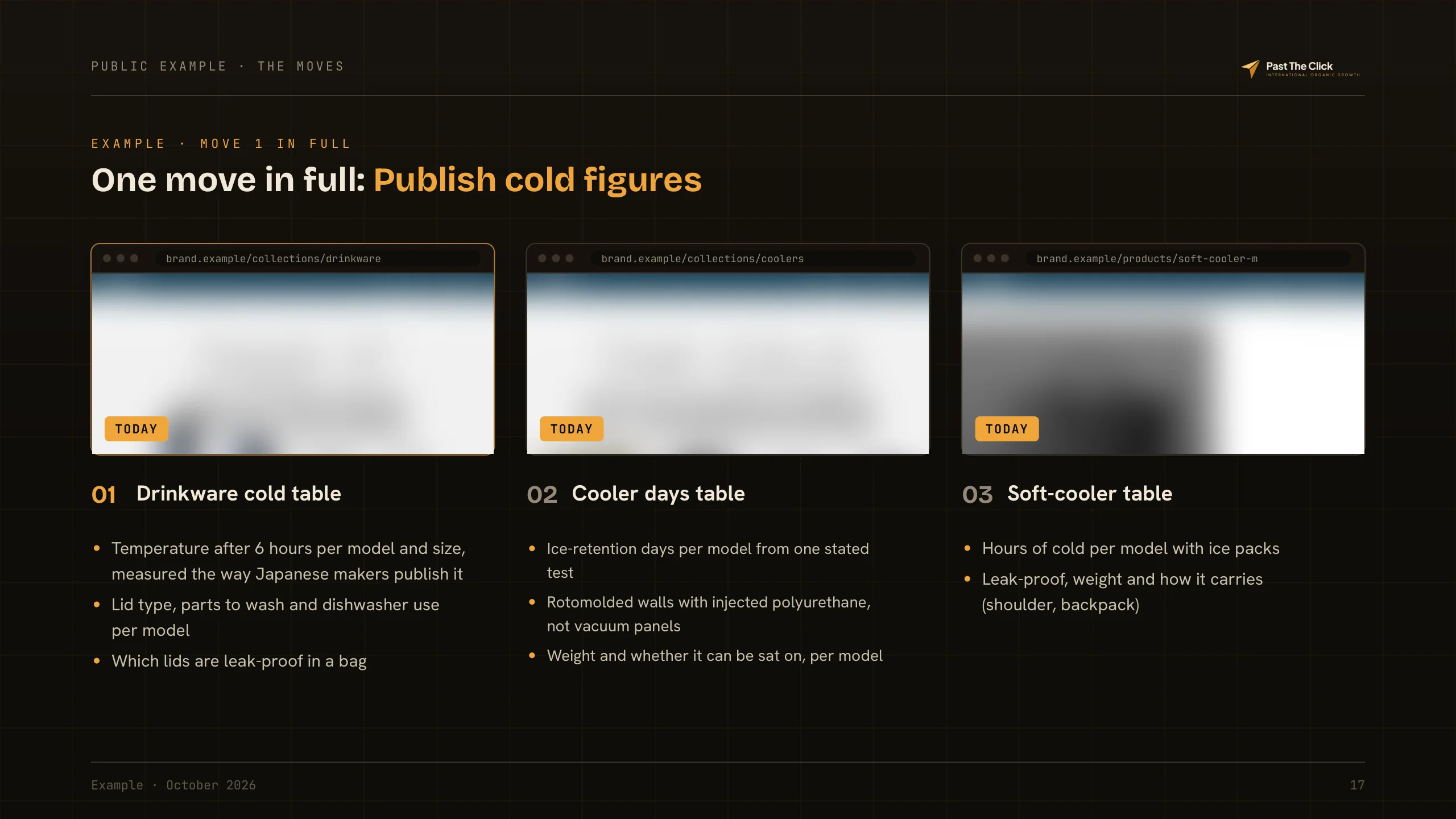
The first move is spelled out: three tables on the brand’s own pages with the cold figures the answers compare on, measured the way Japanese makers publish them.
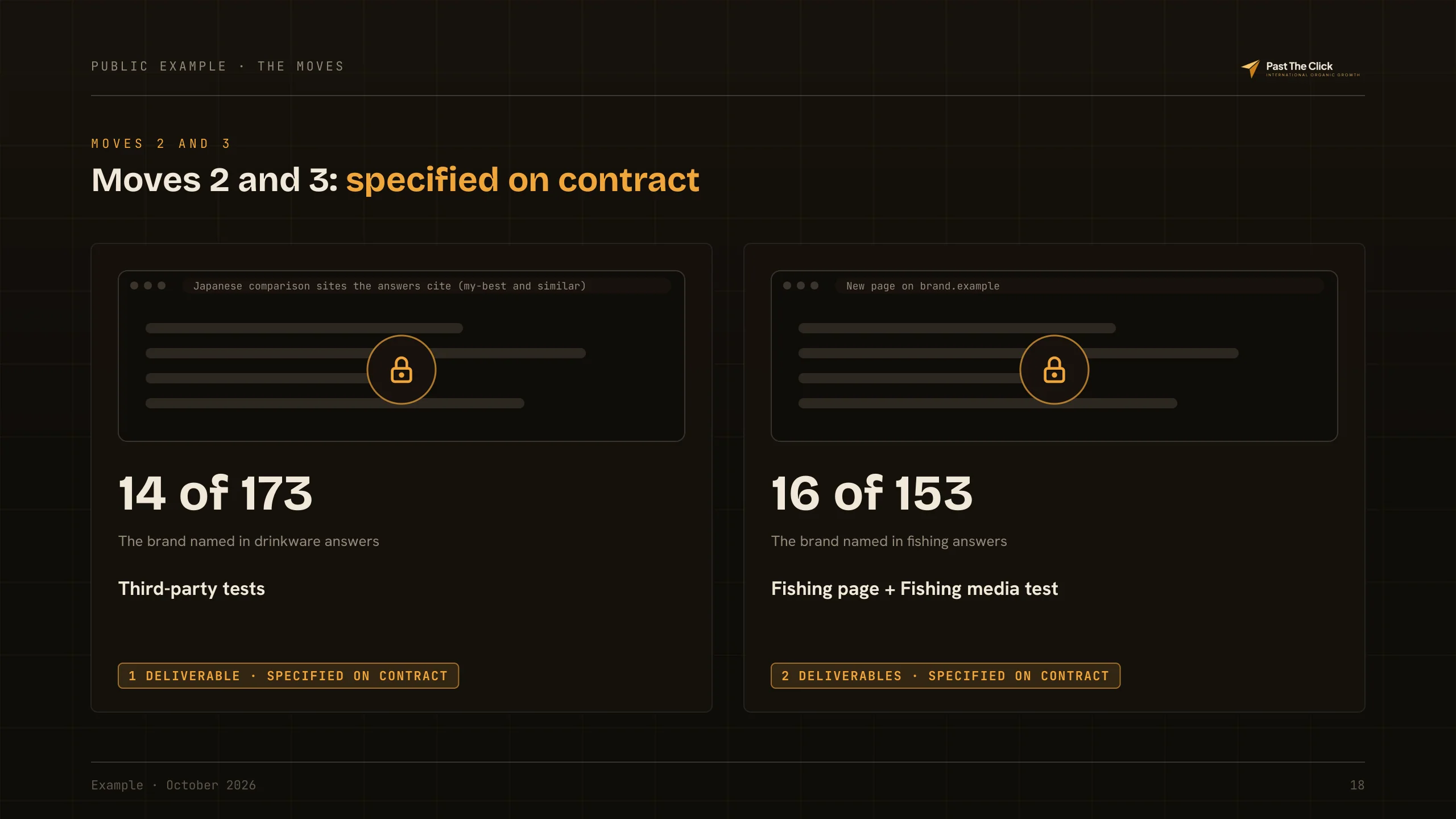
Moves two and three, third-party tests and a fishing page with a fishing-media test, are named with their figure and specified on contract.
Three figures, read again on the same questions.
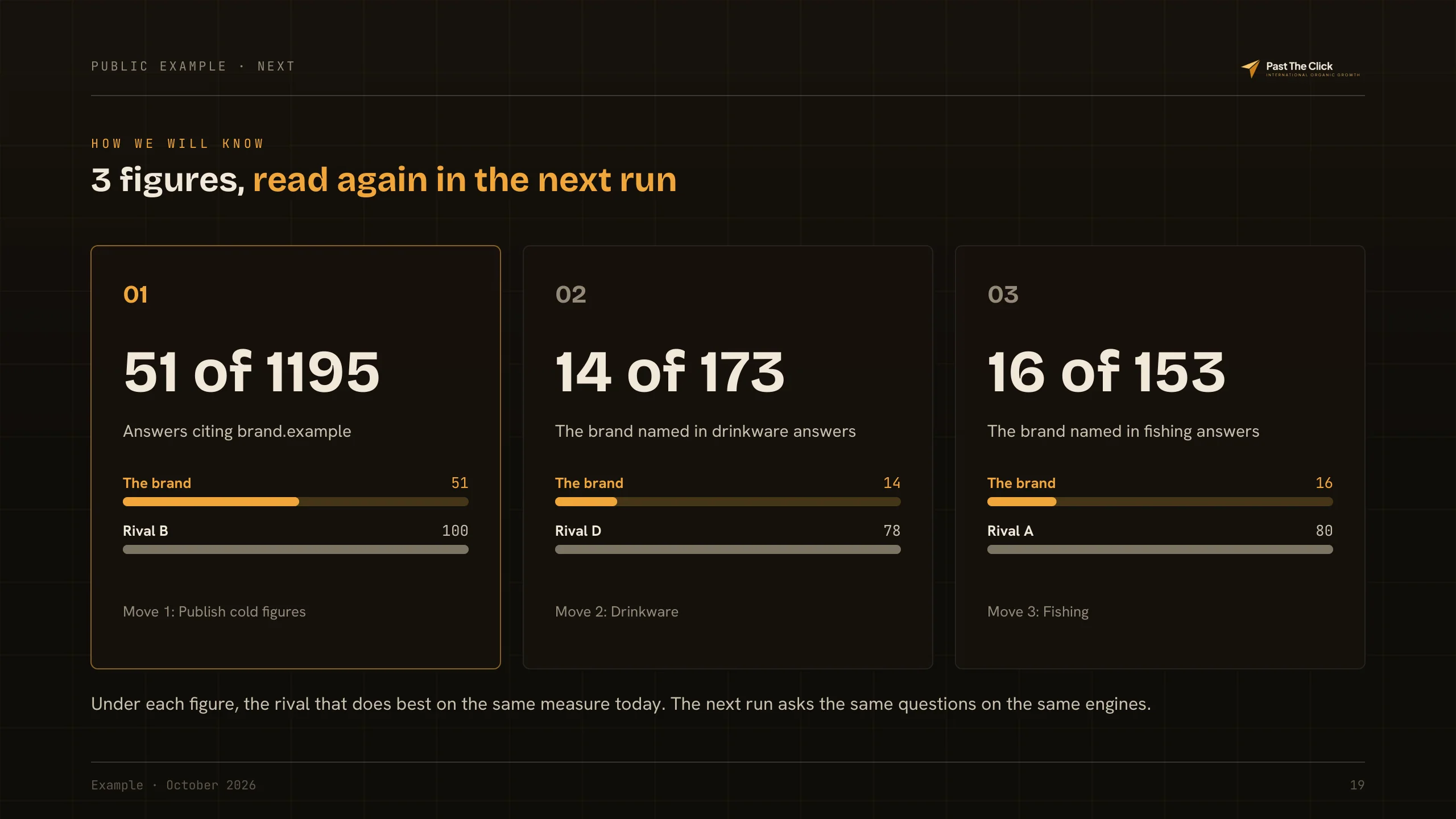
Each move has one figure that should change, shown next to the rival that does best on it today: answers citing the brand’s site, 51 of 1,195; the brand named in drinkware answers, 14 of 173; in fishing answers, 16 of 153. The next read asks the same questions on the same engines, so the comparison holds.
Your own map, on the first call.
A 30-minute call. We map your brand in the markets you choose before we meet, and walk you through it with the first moves.